


Introduction
Fat loss advice is often complicated. People are told to follow strict diets, cut out entire food groups, or use specific meal timings and supplements. Because of this, very simple habits rarely feel powerful enough to matter. One such habit is drinking water before meals. It sounds almost too basic to make a difference. After all, how could a glass of water influence body fat? But when researchers actually tested this idea in controlled settings, the results were more interesting than expected. In certain groups, drinking water before a meal led to meaningfully lower calorie intake without changing the food itself.
The Basic Idea Behind Water Before Meals
The logic is simple. If you drink water before eating, your stomach fills slightly, activating stretch receptors and sending fullness signals to the brain earlier during the meal. As a result, you may feel satisfied sooner and naturally stop eating at a smaller portion. There is no special metabolic effect here. Water does not burn fat. It simply helps reduce calorie intake without conscious restriction.
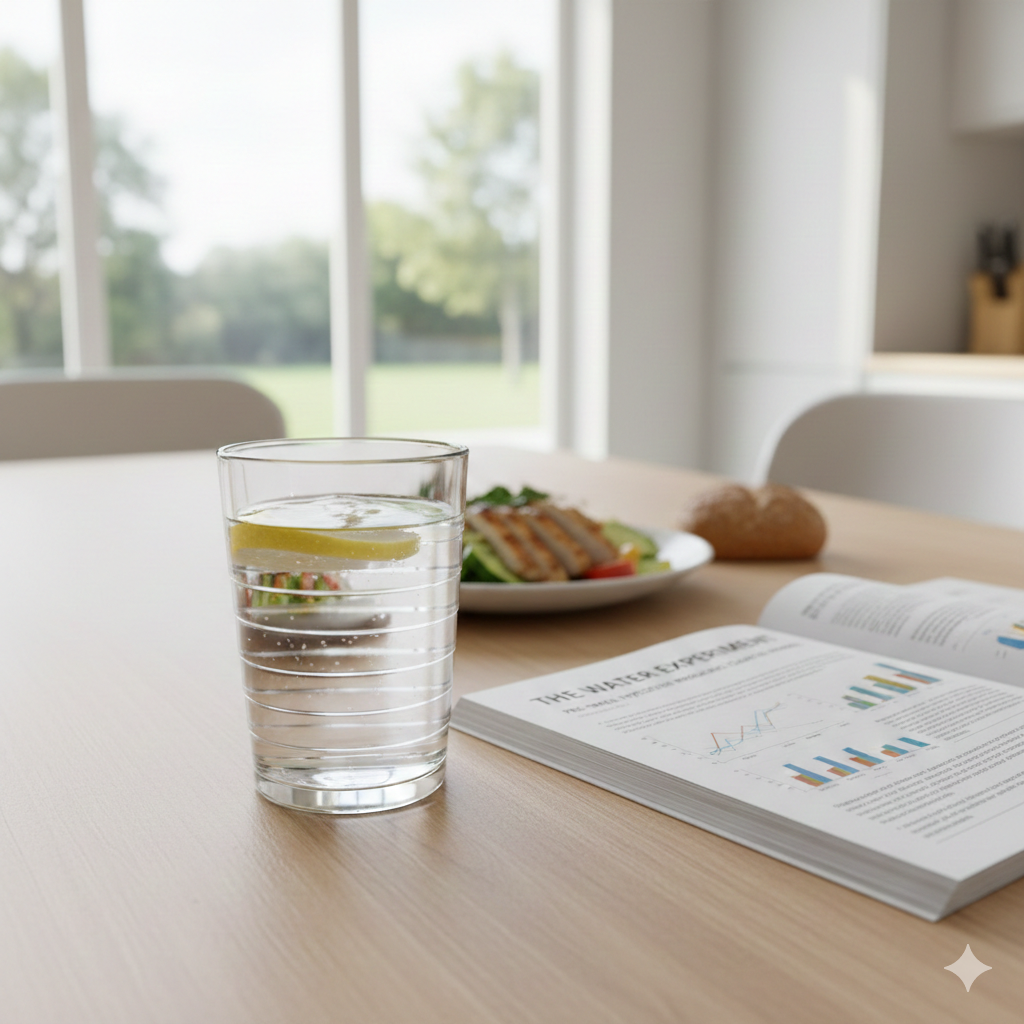
Researchers tested this idea in a group of 24 overweight and obese older adults with an average age of around 61 years. The design was straightforward. Each participant ate a standardised breakfast on two separate occasions — on one day they drank 500 ml of water 30 minutes before the meal, and on another day they had the same meal without any water beforehand. Researchers then measured how many calories were consumed at each meal to directly test whether drinking water beforehand influenced how much people ate.
What Happened When They Drank Water
The results were clear. When participants drank water before the meal, they consumed about 13 percent fewer calories compared to when they did not. That translated to roughly 74 fewer calories in a single breakfast. The effect was consistent across different participants and was not strongly influenced by age, sex, body weight, or usual water intake.
In simple terms, drinking water before eating helped them eat less even though the meal itself did not change. The most likely explanation is increased satiety. Water may slightly stretch the stomach and slow down the emptying process, which leads to earlier fullness signals, reduced portion sizes, and lower overall calorie intake. The body does not burn more fat because of the water. Instead, the person simply eats a little less, which creates a small calorie deficit over time.
What Happens If This Habit Is Repeated Daily
At first glance a reduction of 74 calories may not sound impressive. But fat loss is often the result of small, consistent deficits accumulated over time. If someone reduces around 74 calories per meal across three meals, that becomes approximately 220 fewer calories per day. Over a month that adds up to more than 6,000 calories, which is roughly equivalent to 0.8 to 1 kilogram of fat loss, assuming everything else stays the same.
And this happens without tracking every bite, eliminating favourite foods, or using supplements. It is simply the result of a small habit repeated consistently. That is the kind of quiet, compounding effect that rarely gets attention because it does not make for an exciting headline, but it is exactly the kind of thing that adds up in the background of a well constructed fat loss plan.
Important Limitations to Understand
Like all research, this study has limitations worth acknowledging. The sample size was small with only 24 participants, all of whom were older adults, so the results may not apply in exactly the same way to younger or leaner individuals. Food intake was also self reported, which can introduce inaccuracies, and the study mainly looked at calorie intake at a single meal rather than long term body weight changes.
This means the results should be seen as promising but not definitive. Drinking water before meals is not a magic trick and it is not a replacement for the fundamentals of fat loss. A consistent calorie deficit, adequate protein intake, resistance training, and long term adherence to habits are still what drive meaningful results. Water before meals simply makes the deficit slightly easier to maintain without additional effort.
The Bottom Line
Fat loss rarely comes from one big change. It usually comes from small, repeatable habits done consistently over months. Drinking 400 to 500 ml of water about 20 to 30 minutes before meals is simple, free, and requires no special planning. The effect per meal is modest, but it compounds quietly across weeks and months.
Sometimes the simplest habits are the ones that work in the background without demanding anything from you. This is one of them
REFERENCE:
https://pubmed.ncbi.nlm.nih.gov/18589036/