








Introduction
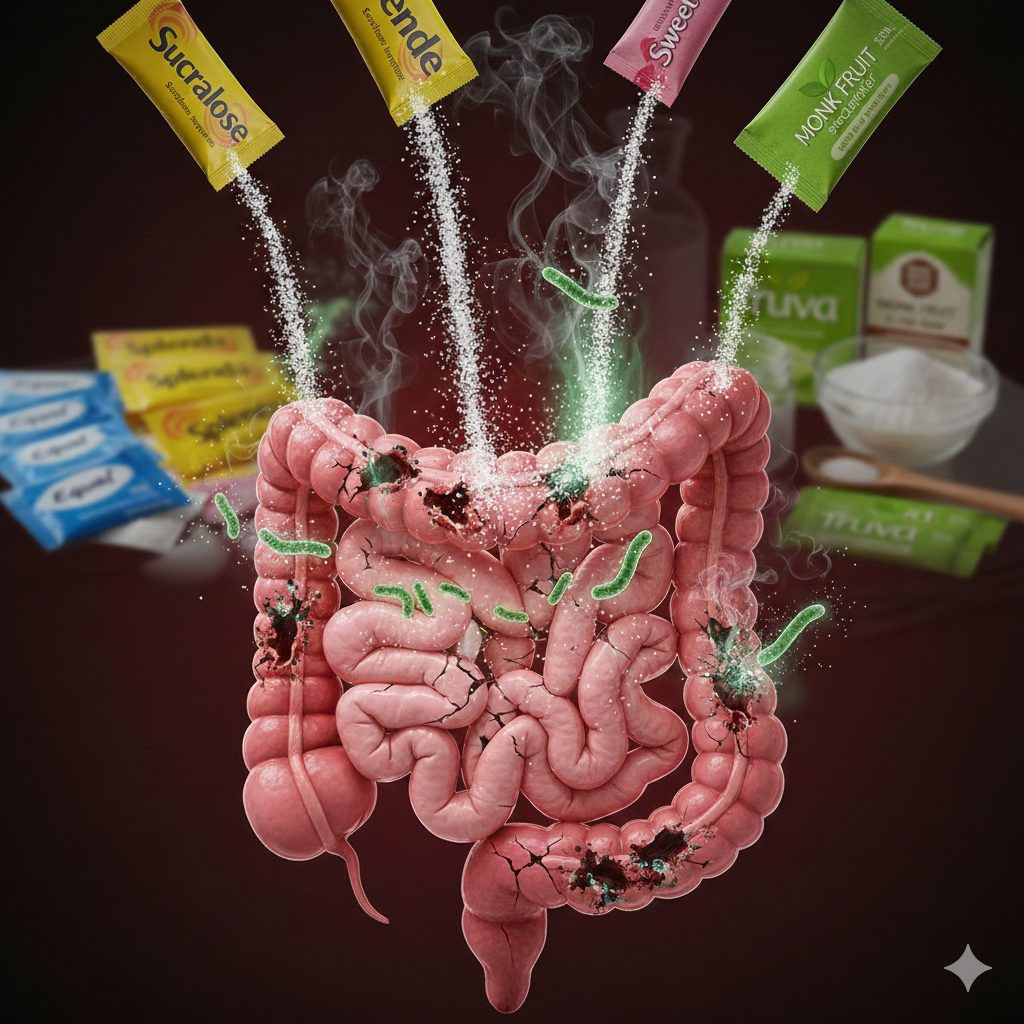
Artificial sweeteners sit in a strange place in the public imagination. They are widely used, approved by major health authorities, and present in everything from diet soda to protein powders. Yet at the same time they are surrounded by suspicion. One of the most common fears is that artificial sweeteners damage the gut microbiome. You have probably heard claims that diet drinks kill your gut bacteria or cause diabetes through microbiome disruption. But when you follow the research timeline, you realise that much of this fear came from a very small amount of early data, while larger and longer human trials tell a very different story.
The Study That Made Everyone Fear Sweeteners
In 2014, a study published in Nature suggested that artificial sweeteners could disrupt the gut microbiome and lead to glucose intolerance. The message spread rapidly. The conclusion was simple, alarming, and easy to remember. But the actual data behind it was far less convincing than the headlines suggested. Most of the experiments were done in mice, which have very different digestive systems and microbiomes compared to humans. The human portion of the study included only seven participants who were given very high doses of saccharin for one week, roughly equivalent to drinking more than five cans of artificially sweetened soda per day.
There was no proper control group, diets were not tightly controlled, and the results were inconsistent. Four participants showed worse glucose responses while three actually improved. The observational part also showed that people who consumed more artificial sweeteners had worse metabolic health, but those individuals were also heavier, which raises the possibility of reverse causation where people at higher metabolic risk are more likely to choose diet products. Despite these limitations, the study’s message spread widely and became the foundation of a belief that has proven very difficult to dislodge. But science does not stop at one study.
What Longer and Better Human Trials Show
As more controlled human studies were conducted, the results started to look very different from the early alarmist claims. One key example is a randomised controlled trial examining high dose sucralose intake where participants consumed the equivalent of around twenty diet sodas per day for a week. Researchers measured glucose control, insulin response, body weight, and gut microbiome composition. There were no significant changes in glucose control, no meaningful changes in the gut microbiome, and no differences compared to the placebo group.
This directly contradicted the idea that artificial sweeteners automatically disrupt gut bacteria. But short term studies only tell part of the story, and what happens over months rather than days is far more relevant to real life. That is where the SWEET study becomes important.
The SWEET Study: A Long Term Real World Test
The SWEET study was a large, publicly funded randomised controlled trial conducted across several European countries involving more than 200 overweight adults. After a two month weight loss phase, participants entered a ten month weight maintenance phase where both groups followed a healthy diet with added sugars limited to less than ten percent of total calories. One group avoided artificial sweeteners entirely while the other used low calorie sweeteners to replace sugary foods and drinks, closely resembling real world conditions with no extreme doses.
After ten months, the sweetener group maintained slightly more weight loss and had smaller waist measurements. More interestingly, their gut microbiome showed favourable changes, including an increase in bacteria that produce short chain fatty acids, which are linked to reduced inflammation and improved gut health. There were no negative effects on glucose metabolism or taste preferences, and cholesterol markers improved at the six month mark. The researchers concluded that long term use of low calorie sweeteners within a healthy diet appeared to be a safe strategy for weight management.
What the SWEET Study Does and Does Not Prove
The SWEET study is one of the strongest pieces of evidence we have on artificial sweeteners and gut health. It is large, randomised, long term, and conducted in free living humans. But like all research it has limitations. The participants were overweight adults who had already lost weight, so the results may not apply identically to lean individuals or those with very different dietary patterns. The intervention also focused on replacing sugar with sweeteners within a structured diet and does not tell us what would happen if someone consumed large amounts of sweeteners alongside a poor quality diet.
While the microbiome changes were favourable, microbiome science is still evolving and changes in bacterial populations do not always translate directly into health outcomes. So the study does not prove that artificial sweeteners improve gut health. But it does strongly challenge the idea that they damage it, which was the central fear driving years of misinformation.
Not All Sweeteners Behave the Same Way
Another important point often missed in these discussions is that artificial sweeteners are not one single substance. Aspartame is broken down into amino acids in the small intestine and absorbed before it even reaches the colon, meaning it has very little direct interaction with gut bacteria. Sucralose mostly passes through the body unchanged with only a small portion absorbed and even less metabolised.
Stevia is somewhat different. Certain compounds in stevia can be metabolised by gut bacteria, which may lead to small shifts in microbiome composition, though these changes appear minor and not harmful within normal intake levels. Lumping all sweeteners together and assuming they behave the same way is scientifically inaccurate and contributes to the confusion. The mechanisms, absorption pathways, and gut interactions differ meaningfully across individual compounds.
The Bottom Line
The fear around artificial sweeteners and gut health largely came from small, short term, and mostly animal based studies that had major limitations and did not reflect typical human consumption patterns. Better designed human trials, including the SWEET study, show neutral or even slightly beneficial effects when sweeteners replace sugar within a healthy diet. Artificial sweeteners are not magic and do not automatically improve health, but they also do not appear to damage the gut in the way popular media often suggests.
For most people, the bigger determinants of gut health remain the basics. A diet rich in fibre, whole foods, fruits, vegetables, and minimally processed foods has a far greater impact on the microbiome than whether you use an occasional diet soda or low calorie sweetener. Artificial sweeteners are simply tools. Used appropriately they can help reduce sugar intake and support weight management. As with most things in nutrition, the overall dietary pattern matters far more than any single ingredient.
REFERENCE:
https://pmc.ncbi.nlm.nih.gov/articles/PMC12552123/pdf/42255_2025_Article_1381.pdf
https://caloriecontrol.org/authoritative-statements-lcs/
https://www.mdpi.com/2072-6643/12/11/3408
https://www.nature.com/articles/nature13793