



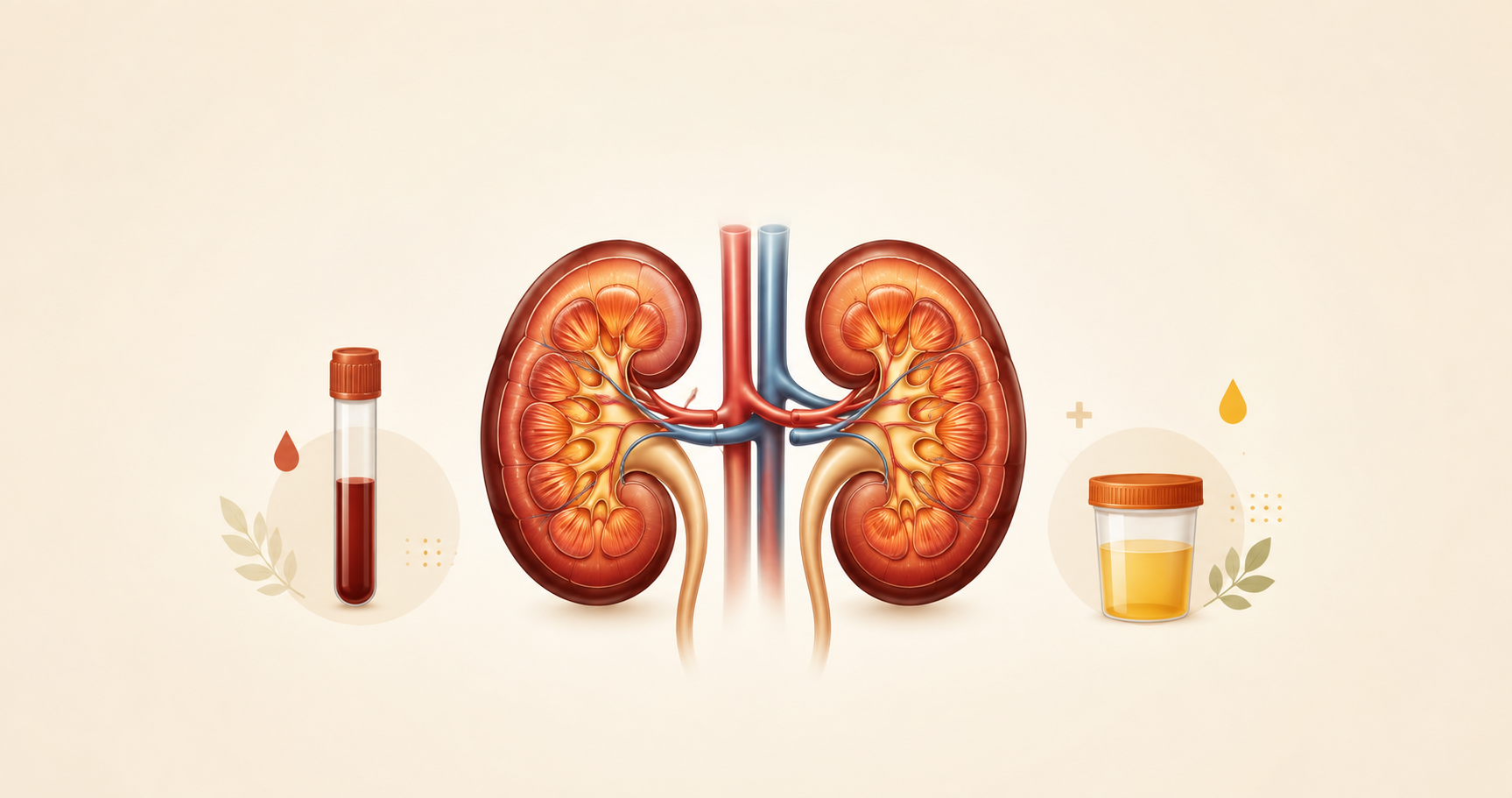
Creatinine is one of the most commonly measured blood test values and one of the most misunderstood. It appears in kidney function tests, full body checkup reports, and specialist workups. Together with eGFR (estimated Glomerular Filtration Rate), it provides the most accurate picture of kidney function available from a routine blood test.
-> fittr.com/labs/full-body-checkup-test-kharadi-pune/
What Is Creatinine?
Creatinine is a waste product generated by the normal breakdown of creatine phosphate in muscle tissue. Muscles metabolise creatine to produce energy and release creatinine as a byproduct at a fairly constant rate throughout the day. Healthy kidneys continuously filter creatinine out of the blood for excretion in urine. When kidney function declines, creatinine accumulates and serum levels rise.
CREATININE REFERENCE RANGES: Men 0.6-1.2 mg/dL | Women 0.5-1.1 mg/dL. Note: Athletes and very muscular individuals may have naturally higher creatinine without kidney disease. Temporary elevations occur with intense exercise, high protein intake, and dehydration.
What Is eGFR?
eGFR (estimated Glomerular Filtration Rate) is calculated from creatinine using a formula accounting for age and sex. It estimates how many millilitres of blood the kidneys filter per minute per 1.73 m2 of body surface area. eGFR is more clinically useful than creatinine alone because it adjusts for the fact that creatinine production is proportional to muscle mass – an elderly woman with normal kidneys naturally has lower creatinine than a young muscular man.
eGFR CKD STAGING (KDIGO): Stage 1: above 90 (normal or increased – kidney damage if other markers abnormal) | Stage 2: 60-89 (mildly reduced) | Stage 3a: 45-59 | Stage 3b: 30-44 | Stage 4: 15-29 (severe) | Stage 5: below 15 (kidney failure).
Other Key Values in a Kidney Function Test
Blood Urea Nitrogen (BUN)
Normal: 7-20 mg/dL. BUN measures nitrogen content of urea – a protein metabolism waste product. Rises in kidney impairment, dehydration, and high protein intake. BUN/creatinine ratio helps distinguish causes.
Uric Acid
Elevated uric acid alongside impaired eGFR suggests kidneys cannot adequately filter uric acid, accelerating kidney damage and increasing stone risk.
Electrolytes
Sodium, potassium, and bicarbonate are regulated by the kidneys. Elevated potassium (hyperkalaemia) in advanced kidney disease can cause serious cardiac complications.
When Should You Get a Kidney Function Test?
- Adults above 40 – annual screening recommended
- People with diabetes – kidneys are a primary target of diabetic damage
- Individuals with hypertension – a leading cause of chronic kidney disease
- History of kidney stones or UTIs
- Long-term use of NSAIDs (ibuprofen, diclofenac)
- Swelling of legs or feet, persistent fatigue, or changes in urination
Frequently Asked Questions
Q1. What is creatinine and why is it tested?
Creatinine is a waste product produced by muscles at a constant rate and filtered out of the blood by the kidneys. Because its production is steady, its blood level is a reliable indicator of kidney filtration efficiency. Elevated creatinine means the kidneys are filtering less efficiently than normal.
Q2. What is the normal creatinine level?
Normal serum creatinine is 0.6 to 1.2 mg/dL for men and 0.5 to 1.1 mg/dL for women. A single elevated result may be temporary due to dehydration, exercise, or high protein intake. Persistent elevation across two or more tests is more clinically significant.
Q3. What is eGFR and what does it mean?
eGFR (estimated Glomerular Filtration Rate) estimates how many millilitres of blood the kidneys filter per minute. Calculated from creatinine, age, and sex. Above 60 mL/min/1.73m2 is generally normal. Below 60 suggests reduced kidney function, staged from CKD Stage 3 (mild) to Stage 5 (kidney failure, eGFR below 15).
Q4. Can creatinine be high temporarily?
Yes. Intense exercise, high protein intake, dehydration, and some medications (NSAIDs, certain antibiotics) can temporarily raise creatinine without indicating kidney disease. Doctors typically repeat the test before diagnosing kidney disease.
Q5. Where can I book a kidney function test in Pune?
FITTR Labs offers kidney profile testing (creatinine, BUN, uric acid, eGFR, electrolytes) with home blood sample collection across all 10 Pune locations. These tests are also included in the FITTR Labs full body checkup.
Q6. What is the difference between creatinine and eGFR?
Creatinine is the raw measured waste product concentration. eGFR is calculated from creatinine and corrects for age and sex. A young muscular man and an elderly woman can have the same creatinine but very different eGFR values – eGFR accounts for this difference and is more accurate for staging kidney function.
Book your Kidney Function Test – https://www.fittr.com/labs/