Why an Oats Shake Is a Genuinely Useful Weight-Loss Option
An oats shake blends raw or lightly cooked oats with milk, protein and other ingredients into a drinkable meal, giving you the same fiber and satiety benefit as a bowl of oatmeal in a faster, more portable format. For anyone whose mornings genuinely do not allow time to sit down with a bowl, this is a legitimate alternative rather than a compromise.
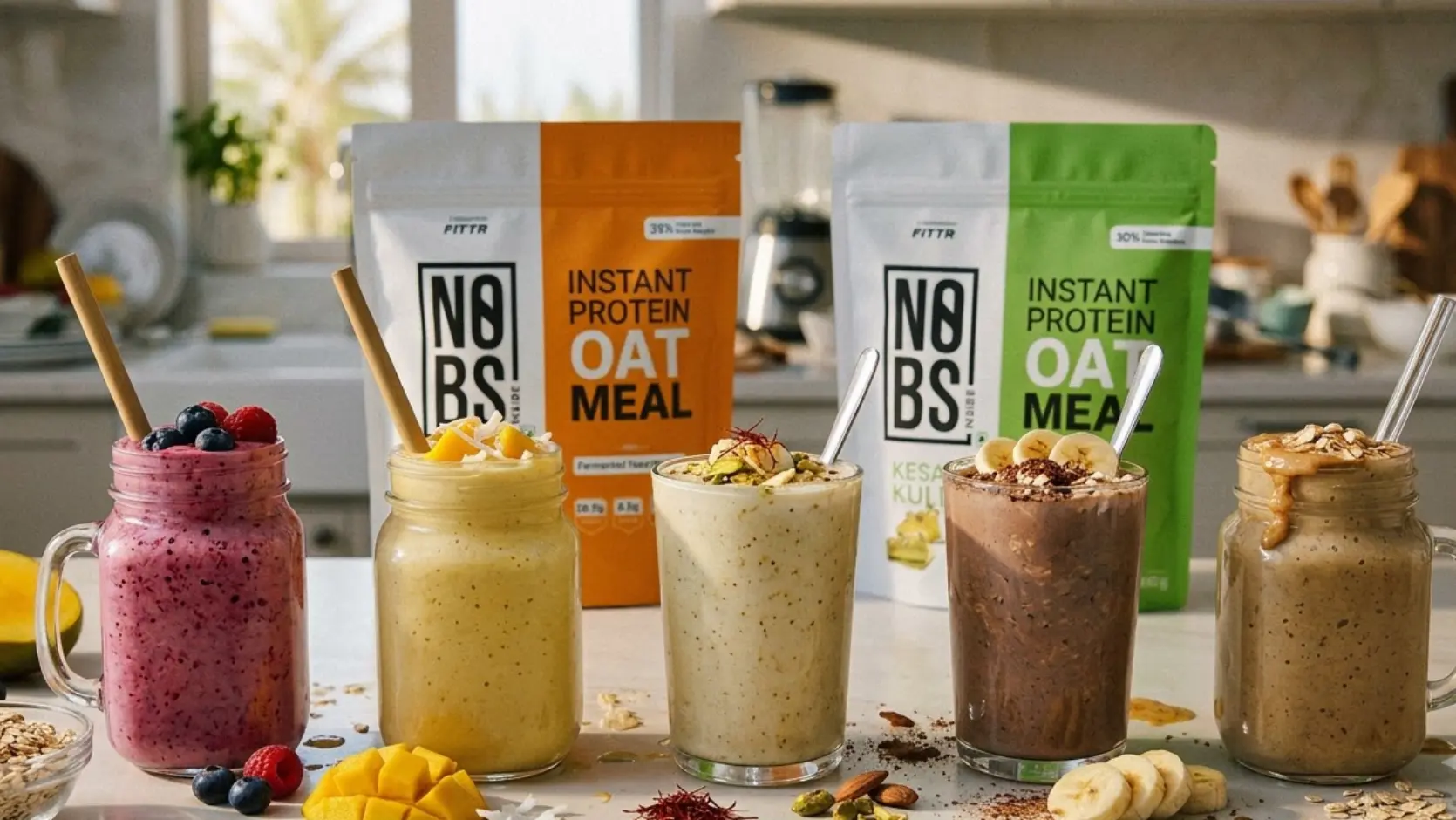
This guide gives you five specific, practical recipes, each kept comfortably under 300 kcal and built around a meaningful protein content, so an oatmeal shake to lose weight actually earns its place in your daily routine.
Each recipe is designed to be genuinely simple, using ingredients most people already have on hand, so you can start using them tomorrow morning without a special shopping trip first.
The Base Oats Shake Formula
Every recipe below builds on the same simple base, so it’s worth understanding the formula before the specific variations.
Ratios That Blend Well
A reliable starting point is 30 grams of oats, 200-250ml of milk or a milk alternative, and a protein source, blended until smooth. Oats blend more easily if soaked briefly in the liquid for five to ten minutes before blending, softening them enough to avoid a gritty texture.
A basic blender is all the equipment this requires – no specialised high-powered machine is necessary, though a more powerful blender will produce a slightly smoother finish if you have one available.
Recipe 1: Classic Vanilla Protein Oats Shake
30g oats, 200ml milk, half a scoop of vanilla protein powder, a few ice cubes. Blend until smooth. Approximately 220-250 kcal, with 20-25g of protein depending on your specific protein powder.
Recipe 2: Banana Oatmeal Protein Shake
30g oats, 200ml milk, half a small banana, half a scoop of protein powder. Blend well. Approximately 260-280 kcal, offering natural sweetness without any added sugar.
Recipe 3: Chocolate Peanut Butter Oats Shake
30g oats, 200ml milk, half a scoop of chocolate protein powder, a level teaspoon of peanut butter. Blend until smooth. Approximately 280-300 kcal, a genuinely indulgent-tasting option that still fits comfortably within the calorie target.
Recipe 4: Berry Greek Yogurt Oats Shake
30g oats, 150ml milk, 3 tablespoons Greek yogurt, a handful of frozen mixed berries. Blend until smooth. Approximately 230-250 kcal, with the Greek yogurt adding meaningful protein alongside the oats.
Recipe 5: Coffee Oats Protein Shake
30g oats, 200ml milk, half a scoop of vanilla or coffee-flavoured protein powder, a shot of cooled espresso or a teaspoon of instant coffee. Blend until smooth. Approximately 220-240 kcal, doubling as a caffeine hit alongside breakfast.
How to Add More Protein to Any Oats Shake
If any of the recipes above feel light on protein for your specific goal, a few simple additions boost the total without significantly changing the flavour.
Simple Protein Boosters
A full scoop instead of half a scoop of protein powder, an added tablespoon of Greek yogurt, or a spoon of cottage cheese blended in are all effective, low-effort ways to raise the protein content further. Fittr’s guide to how much protein you actually need can help you work out your daily target.
Egg whites, pasteurised for safety, are another option some people use to boost protein in a blended shake, though this works best if you have access to a pasteurised liquid egg white product specifically, rather than raw shell eggs.
Oats and Protein Powder Shake vs a Cooked Bowl
Nutritionally, an oats and protein powder shake and a cooked bowl of oats with the same ingredients offer essentially the same benefit – the fiber content and calorie count remain very similar whether blended or cooked.
Choosing Based on Convenience, Not Nutrition
The real difference is practical rather than nutritional: a shake is faster to prepare and easier to drink on the move, while a cooked bowl offers more chewing satisfaction, which some people find more satisfying psychologically even at a similar calorie count.
Neither format is objectively superior for weight loss – choose whichever you’ll realistically prepare and consume consistently across a busy week.
Storing and Prepping Oats Shakes in Advance
Like overnight oats, an oats shake can be partially prepared ahead of time to save effort on genuinely busy mornings.
Pre-Portioning for the Week
Measuring dry oats and any powder ingredients into individual containers or bags in advance means your morning routine only requires adding liquid and blending, cutting the active preparation time down to under two minutes per shake.
When an Oats Shake Works Best
An oatmeal shake weight loss approach particularly suits specific situations where a traditional bowl is impractical.
Ideal Use Cases
Rushed mornings, post-workout recovery when you want something fast and easy to digest, and anyone who simply prefers drinking their breakfast to eating it are all genuine, valid reasons to lean on shakes rather than treating them as a lesser option compared to a bowl.
For anyone training early in the morning, a shake also has the practical advantage of being easier to digest quickly before a workout than a denser, chewier bowl of oats would be.
Common Mistakes With Oats Shakes for Weight Loss
- Adding excessive fruit or honey for sweetness, which can push a shake well past the intended calorie target.
- Using full-fat ice cream or flavoured syrups instead of the protein and fruit sources suggested above.
- Skipping the protein addition entirely and relying on oats and milk alone, which reduces satiety considerably.
- Not soaking the oats briefly before blending, resulting in a gritty, less enjoyable texture that discourages consistent use.
- Treating a shake as a snack on top of a full breakfast rather than as the meal itself.
Building an Oats Shake Routine
As with any weight-loss habit, the real benefit comes from consistency rather than any single perfect recipe.
Rotating the Five Recipes Above
Keeping two or three of these five recipes in regular rotation prevents flavour fatigue while giving you the flexibility to match your mood or what ingredients you have on hand on any given morning.
Over a few weeks, you’ll likely find one or two recipes become your default go-to choice, with the others reserved for variety when you want a change – a completely natural, sustainable way for the habit to settle in long-term.
Common Myths About Oats Shakes
- An oats shake is not nutritionally inferior to a cooked bowl; both offer similar fiber and calorie content for the same ingredients.
- Oats shakes do not need added sugar to taste good; natural sweetness from banana or berries is usually sufficient.
- Drinking your oats does not reduce the fiber’s satiety effect meaningfully compared to eating it in bowl form.
- An oats and protein powder shake is not automatically high-calorie; portion and ingredient choice determine that, as with any meal.
- You do not need specialised equipment beyond a basic blender to make any of these recipes.
The Bottom Line
An oats shake for weight loss offers the same genuine fiber and satiety benefit as a cooked bowl, in a faster, more portable format that suits busy mornings or post-workout recovery. The five recipes above each stay under 300 kcal while delivering meaningful protein, giving you real variety to rotate through.
For the underlying science on why oats support weight loss generally, see Fittr’s guide to oats for weight loss, and pair your shakes with an understanding of your total daily energy needs to make sure the rest of your day fits your goal too.
Frequently Asked Questions
Is an oats shake good for weight loss?
Yes, an oats shake offers the same fiber and satiety benefit as cooked oats, in a fast, portable format that supports a calorie deficit when kept reasonably low in added sugar.
How do I make an oatmeal protein shake?
Blend around 30g of oats with 200-250ml of milk and a protein source such as protein powder or Greek yogurt until smooth, soaking the oats briefly first for a smoother texture.
Does an oatmeal shake to lose weight need protein powder?
No, Greek yogurt or cottage cheese can provide similar protein content if you prefer not to use protein powder.
How many calories should an oats and protein powder shake have?
Most effective weight-loss shakes fall between 200-300 kcal, depending on your specific ingredients and portion sizes.
Can I drink an oatmeal shake instead of eating breakfast?
Yes, a well-built oats shake is a genuine, complete breakfast replacement, offering similar nutrition to a cooked bowl in a faster format.
Shake Up Your Healthy Habits
Oats shake for weight loss, an oatmeal protein shake, or simply an oats and protein powder shake – whichever phrasing brought you here, the five recipes above give you a genuine, calorie-conscious starting toolkit.
Try two or three in rotation, keep the added sugar minimal, and a shake can become just as reliable a weight-loss breakfast as a traditional bowl.