Three Oats, One Grain, Different Outcomes
Rolled, steel cut and instant oats all come from the exact same oat groat – the difference between them is purely how much processing that groat has been through before it reaches your bowl. For a weight-loss goal specifically, that processing difference genuinely matters, even though the raw nutrition numbers look broadly similar on paper.
This guide puts all three types side by side directly, so you can decide which type of oats is best for weight loss based on your own priorities and schedule.
How Each Type Is Made
Understanding the processing difference explains everything else that follows about how each type behaves for weight loss.
From Whole Groat to Your Bowl
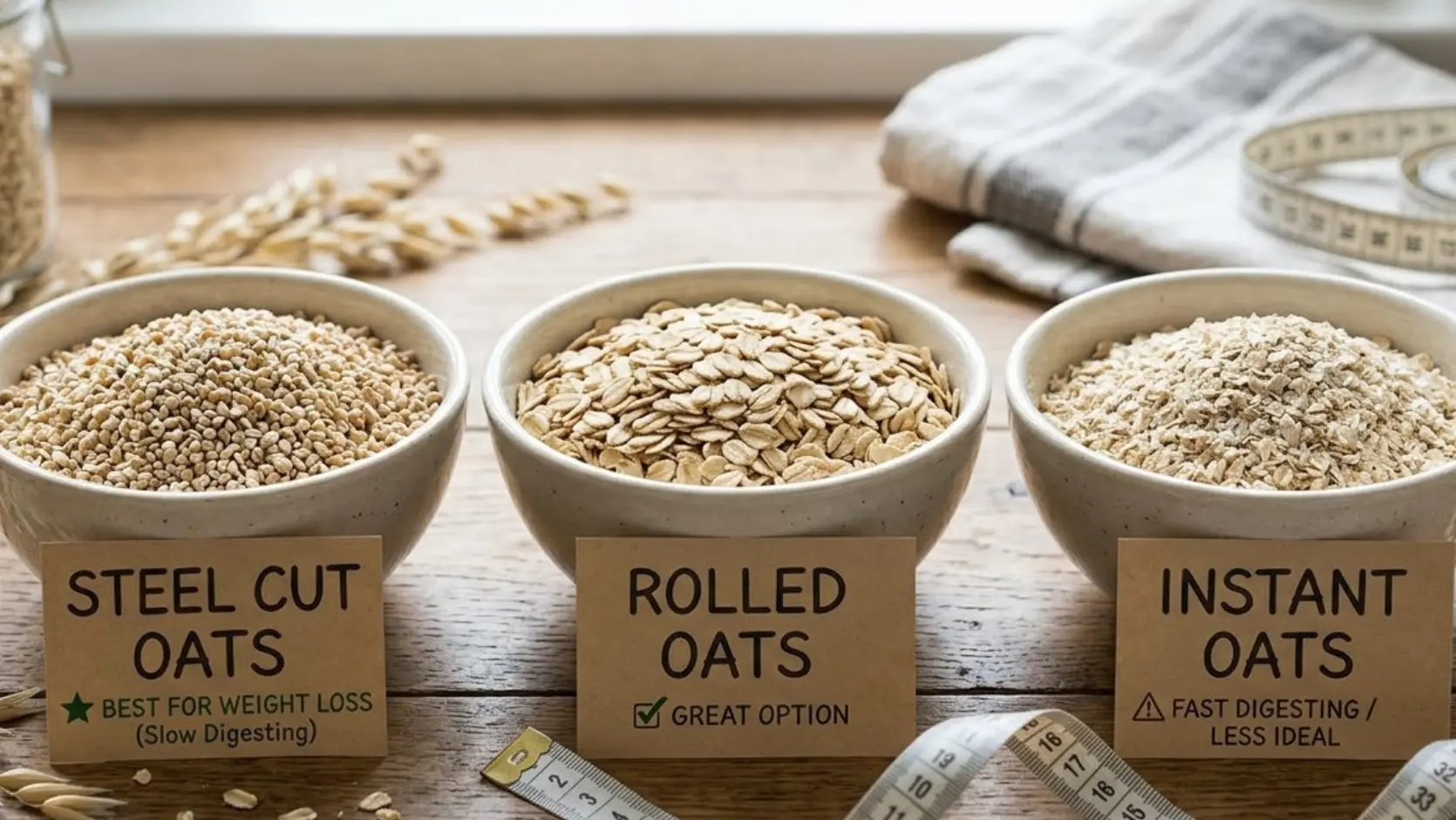
Steel cut oats are the whole oat groat simply chopped into two or three pieces. Rolled oats are steamed and flattened between rollers, a step further in processing. Instant oats are steamed, rolled thinner and often partially pre-cooked, the most processed of the three, which is why they cook in minutes rather than needing simmering time at all.
Nutrition Comparison: Are They Really Different?
In their plain, unflavoured form, all three types offer broadly similar calories, fiber and protein per equivalent dry weight, since they come from the same base grain.
Where the Real Difference Actually Lies
The meaningful difference for weight loss is not raw nutrition on the label, but digestion speed and, for many instant products specifically, added sugar in flavoured varieties. Fittr’s explainer on dietary fiber covers why the fiber itself matters regardless of which type you choose.
Glycemic Impact: Which Digests Slowest?
Because less-processed oats take longer for your digestive system to break down, they tend to produce a gentler, more gradual blood sugar response after eating.
Steel Cut, Rolled, Then Instant
Steel cut oats generally have the lowest glycemic impact of the three, rolled oats sit in the middle, and instant oats – particularly flavoured varieties – tend to produce the fastest, sharpest blood sugar response. Fittr’s guide to glycemic index and load explains why this matters for hunger control specifically.
Satiety: Which Keeps You Fullest for Longest?
Slower digestion generally translates into longer-lasting fullness, which is the practical benefit that actually matters most for a weight-loss goal.
Why This Is the Deciding Factor for Many People
Many people report feeling full for meaningfully longer after a bowl of steel cut oats compared with a calorie-matched bowl of instant oats, which can translate into fewer unplanned snacks later in the morning – the practical mechanism behind most oats-and-weight-loss recommendations.
Cooking Time and Convenience
This is where instant oats reclaim their advantage, and it is a genuinely important factor for anyone whose schedule realistically limits how much time they can spend cooking breakfast.
Balancing Benefit Against Realistic Use
Steel cut oats take 20-30 minutes to cook fresh, rolled oats take five to ten minutes, and instant oats are ready in one to two minutes. An overnight soak narrows this gap considerably for steel cut and rolled oats, but instant remains the fastest option for anyone who genuinely will not use any other type consistently.
Sugar Content: The Biggest Practical Trap
The single factor most likely to undermine any of these three types for weight loss is added sugar, and this risk varies considerably by type and specific product.
Why Flavoured Instant Oats Need the Most Scrutiny
Flavoured instant sachets carry the highest risk of meaningful added sugar, since manufacturers often compensate for the blander taste of heavily processed oats with sweeteners. Plain rolled and steel cut oats are far less likely to include added sugar by default, since they are typically sold and prepared plain.
Side-by-Side Comparison Summary
- Processing: steel cut is least processed, rolled is moderately processed, instant is most processed.
- Cooking time: steel cut 20-30 minutes, rolled 5-10 minutes, instant 1-2 minutes.
- Glycemic impact: steel cut lowest, rolled moderate, instant highest, especially flavoured varieties.
- Satiety: generally steel cut and rolled outperform instant for sustained fullness.
- Sugar risk: lowest for plain steel cut and rolled, highest for flavoured instant sachets.
- Best for weight loss when time allows: steel cut or plain rolled oats.
- Best for weight loss when time is very limited: plain instant oats, with sugar checked carefully.
Which Type of Oats Is Best for Weight Loss, Really?
If cooking time is not a major constraint, steel cut oats generally offer the strongest combination of slow digestion and satiety. If you need a genuine middle ground, plain rolled oats – especially prepared overnight – deliver most of that benefit with far less active cooking time.
The Honest Answer for Most People
Plain instant oats remain a reasonable choice specifically for anyone who would otherwise skip breakfast entirely due to time pressure, provided you choose the unflavoured version and add your own protein and toppings rather than relying on a sweetened sachet.
Fiber Content Differences Worth Knowing
While all three oat types retain meaningful fiber from the whole grain, minor differences in processing can slightly affect the exact fiber count per serving depending on the specific brand and product.
Checking the Label Rather Than Assuming
Rather than assuming a fixed fiber difference between types, checking the specific nutrition label on your chosen product gives a more accurate picture, since fiber content can vary somewhat between brands even within the same broad oats category.
Making Any Type Work Better for Weight Loss
Regardless of which type you choose, a few habits improve the weight-loss outcome across all three.
Universal Improvements That Apply to Every Type
Pairing any oats type with a protein source, keeping added sugar minimal, and measuring a consistent 40-50 gram portion improves the weight-loss outcome regardless of whether you are using steel cut, rolled or instant oats. Fittr’s body fat calculator can help you set the right overall calorie target these portions should fit within.
Common Myths About Oats Types and Weight Loss
- Instant oats are not automatically bad for weight loss; plain, unflavoured instant oats work reasonably well too.
- Steel cut oats are not meaningfully lower in calories than rolled oats; the advantage is digestion speed, not raw calorie content.
- A more processed oat type does not mean it lacks fiber entirely; all three retain meaningful fiber from the whole grain.
- There is no single “best” type for everyone – the right choice depends on your available cooking time as much as the food itself.
- Switching oat types will not dramatically change results on its own if overall calorie intake and toppings remain unchanged.
The Bottom Line
Rolled, steel cut and instant oats all come from the same grain and can each support weight loss, but they are not identical in practice. Steel cut oats generally offer the strongest satiety and lowest glycemic impact, rolled oats provide a practical middle ground, and plain instant oats remain useful for anyone whose schedule genuinely will not accommodate the other two.
Choose based on your realistic cooking time, keep added sugar minimal regardless of type, and pair your choice with protein and a measured portion. For the broader evidence on why oats support weight loss generally, see Fittr’s guide to oats for weight loss.
Frequently Asked Questions
Which oats is best for weight loss – rolled, steel cut or instant?
Steel cut oats generally offer the slowest digestion and longest fullness, but plain rolled or instant oats can work well too if that’s what you’ll eat consistently.
Which type of oats is best for weight loss if I have no time to cook?
Plain instant oats, prepared without added sugar and paired with your own protein and toppings, is the most realistic option for very limited time.
Are steel cut oats significantly lower in calories than rolled oats?
No, raw calories are broadly similar between types; the weight-loss advantage of steel cut oats comes from slower digestion, not fewer calories.
Is instant oats bad for weight loss?
Not inherently – the risk is mainly with flavoured sachets that add sugar; plain instant oats are a reasonable option when time is limited.
What are the best oats to reduce weight overall?
Any plain, minimally sweetened oats type paired with a protein source and a consistent portion supports weight loss effectively.
Choose the Oats That Fit Your Lifestyle
Which oats is best for weight loss, which type of oats is best for weight loss, or the best oats to reduce weight – across every phrasing, the honest answer is that all three types can work, with steel cut generally offering the strongest satiety edge when time allows.
Choose based on your realistic schedule, keep the toppings simple, and consistency will matter more than which specific type you land on.