








Introduction
Over the past few years, oxalates have been turned into a new dietary villain. Spinach, nuts, legumes, tea, chocolate, and even sweet potatoes are sometimes portrayed as toxic foods simply because they contain oxalates. In some corners of the internet, people are being told to avoid entire groups of plant foods to protect their kidneys, joints, or mineral status. The message is usually simple and alarming: oxalates bind minerals, form kidney stones, and therefore plant foods rich in oxalates must be harmful. But when you look at the actual scientific literature, the story becomes far more nuanced. The research does not support the idea that oxalates are universally dangerous or that healthy people need to avoid plant foods because of them.
What Oxalates Actually Are
Oxalate, also called oxalic acid, is a naturally occurring compound found in many plants. It is produced by almost all photosynthetic organisms and serves several roles such as regulating minerals, protecting the plant from pests, and detoxifying heavy metals. Humans also produce oxalate internally as a byproduct of normal metabolism, especially from compounds like vitamin C, glycine, and hydroxyproline. Because of this, a large portion of the oxalate found in urine comes from internal production rather than food.
When we eat foods containing oxalate, only a small fraction is actually absorbed. Research estimates suggest that about 2 to 22 percent of dietary oxalate enters the bloodstream. The rest is either bound to minerals in the gut or excreted. This already challenges the idea that eating oxalate rich foods directly leads to excessive oxalate levels in the body.
Where Oxalates Are Found and How Cooking Changes Everything
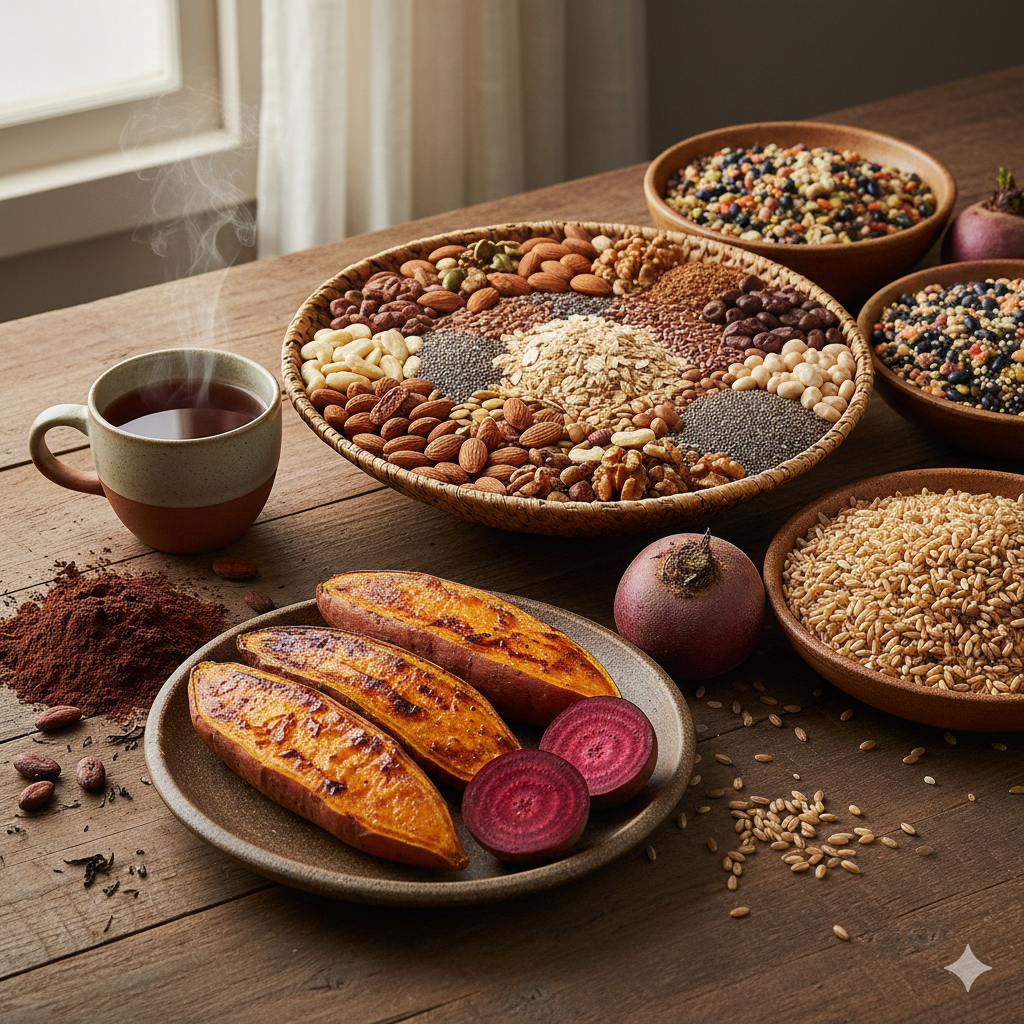
Oxalates are present in many commonly consumed plant foods. The highest levels are typically found in leafy greens such as spinach, Swiss chard, and beet greens, as well as rhubarb, taro, and amaranth. Moderate amounts are found in nuts and seeds, legumes, whole grains, cocoa, tea, sweet potatoes, and beets. However, oxalate content is not fixed and can vary dramatically based on plant variety, soil quality, growing conditions, and harvest timing. Different spinach cultivars alone have shown more than a twofold difference in oxalate levels, which means the numbers often quoted online are rough estimates rather than precise exposures.
An important detail that anti oxalate arguments consistently ignore is that cooking reduces oxalate levels significantly. Soluble oxalates dissolve in water, so when foods are boiled, soaked, or cooked in liquid, a large portion leaches out. Boiling vegetables can reduce soluble oxalates by 30 to 87 percent, with spinach and Swiss chard showing some of the largest reductions. Steaming reduces oxalates by around 40 percent, and soaking and boiling legumes can reduce their oxalate content by 40 to over 80 percent. Traditional cooking methods already lower exposure substantially before the food even reaches your plate.
The Kidney Stone Concern: What the Studies Actually Show
The main concern around oxalates is their role in calcium oxalate kidney stones, which account for about 80 percent of stone cases. But kidney stone formation is influenced by many factors including hydration status, calcium intake, sodium intake, vitamin C intake, genetics, gut health, and overall diet quality. Large human studies have found that dietary oxalate alone is not a major independent risk factor. Analyses from the Nurses’ Health Study found only a modest association between oxalate intake and kidney stone risk, and interestingly, when calcium intake was adequate, the risk actually decreased.
In men with low calcium intake, higher oxalate intake slightly increased risk. But in men consuming enough calcium, the relationship reversed. This happens because calcium binds oxalate in the gut, preventing its absorption. Without enough calcium, more oxalate remains free and absorbable. This means low calcium intake may actually be a bigger risk factor than oxalate itself, which completely flips the popular narrative on its head.
Dietary Patterns Matter More Than Single Compounds
One of the most striking findings comes from studies of overall diets rather than single nutrients. In people following the DASH diet, which is rich in fruits, vegetables, nuts, legumes, and whole grains, oxalate intake was higher than average. Yet these individuals had a 40 to 50 percent lower risk of kidney stones. This suggests that other nutrients in plant rich diets, including potassium, magnesium, calcium, fibre, and phytochemicals, may offset or even outweigh any potential oxalate related risks.
Another observational study found that vegetable and tea consumption, both sources of oxalate, were associated with a reduced risk of kidney stones, while higher animal protein intake increased the risk. The gut also plays a major role. Certain gut bacteria such as Oxalobacter formigenes can break down oxalate before it is absorbed, meaning people with healthy gut microbiomes may absorb far less oxalate from the same foods. Individuals with digestive disorders, inflammatory bowel disease, or fat malabsorption may absorb more, which again shows that oxalate risk is highly context dependent and cannot be applied as a blanket rule to the general population.
Who Actually Needs to Be Cautious
For most healthy individuals, daily oxalate intake typically falls between 50 and 200 mg and is well tolerated when hydration, calcium intake, and overall diet quality are adequate. Problems are more likely to occur in specific situations such as recurrent kidney stone formers, individuals with hyperoxaluria, people with certain digestive disorders, or those combining extremely high oxalate diets with chronically low calcium intake. In these cases, guidelines recommend limiting very high oxalate foods, maintaining normal calcium intake around 1,000 to 1,200 mg per day, avoiding excessive vitamin C supplementation, and staying well hydrated.
These are targeted therapeutic strategies for specific clinical situations, not general advice for the healthy population. Many of the foods highest in oxalates are also among the most nutrient dense in the human diet. Leafy greens, nuts, legumes, whole grains, tea, and cocoa are consistently associated with lower risks of cardiovascular disease, better metabolic health, and lower overall mortality. If oxalates were inherently harmful in normal dietary contexts, these long term health outcomes would not look so positive.
The Bottom Line
Oxalates are natural compounds found in many plant foods and are also produced by the human body as part of normal metabolism. Only a small portion of dietary oxalate is absorbed, kidney stone formation depends on a wide range of factors beyond oxalate intake alone, and cooking reduces oxalate levels substantially before consumption. Adequate calcium intake helps block absorption in the gut, and plant rich diets are consistently linked to better health outcomes and lower stone risk overall.
For most healthy people, avoiding plant foods because of oxalates is unnecessary and may actually reduce diet quality and long term health outcomes. In nutrition, context always matters more than a single compound. And with oxalates, the full body of evidence tells a very different story from the popular myths.
REFERENCES:
https://pmc.ncbi.nlm.nih.gov/articles/PMC7600777/pdf/nutrients-12-02929.pdf
https://pubmed.ncbi.nlm.nih.gov/34409855/
https://pubmed.ncbi.nlm.nih.gov/24393738/
https://pubmed.ncbi.nlm.nih.gov/32525478/
https://pmc.ncbi.nlm.nih.gov/articles/PMC7551439/
https://pubmed.ncbi.nlm.nih.gov/24857648/