




It is genuinely remarkable that something as small as a ring can house a complete health computer – sensors, a processor, a battery and a wireless radio – and run for over a week on a charge. Open up an electronic ring and the engineering inside is as impressive as anything in a far larger gadget. This guide takes you inside the electronic ring: the components that make it work, how they all fit on your finger, and how the tech turns your body into data. For a focus on what those sensors reveal about your body, see our guide to what a smart ring is; here we look at the hardware itself.
What Is an Electronic Ring?
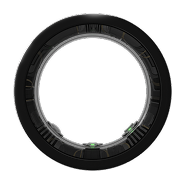
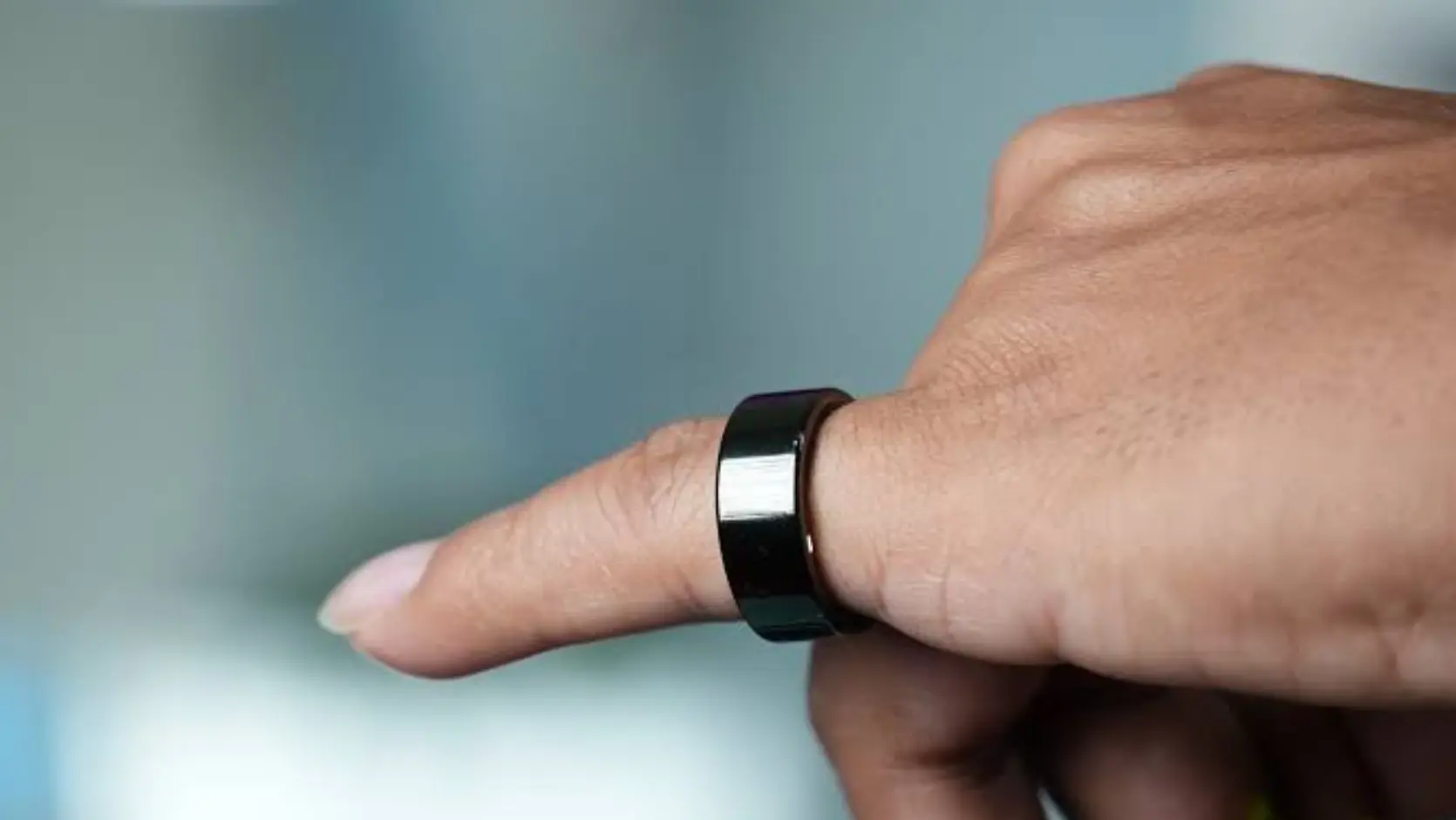
An electronic ring – more commonly called a smart ring – is a ring containing miniaturised electronics that sense your body and communicate with your phone. Unlike a passive accessory, it actively measures signals like heart rate, movement and temperature, processes them, and sends them wirelessly to an app. In effect, it is a tiny wearable computer disguised as a piece of jewellery.
Inside an Electronic Ring
For all its simplicity on the outside, an electronic ring packs several distinct components into its band. Each plays a specific role, and together they turn your finger into a continuous health sensor.
Optical Sensors
The most important sensors are optical. Tiny LEDs shine light into your finger and a photodetector reads the reflected light as your blood pulses, a technique called PPG. From this the ring derives heart rate, heart-rate variability and blood oxygen – a lot of health data from a few flickers of light you never notice.
The Motion Sensor
A miniature accelerometer detects movement in three dimensions. By day it counts steps and recognises activity; by night it tracks how much you move, a key ingredient in estimating sleep and its stages. It is the same kind of sensor that knows which way up your phone is, shrunk to fit a ring.
The Temperature Sensor
A small thermistor reads your skin temperature, most usefully overnight, tracking how far it deviates from your personal baseline. That can hint at illness, recovery or, for women, cycle phases.
The Processor
A low-power microchip is the brain on board. It manages the sensors, does an initial round of processing on the raw signals, and handles storing and transmitting the data. Crucially, it is engineered to sip power, since every spare milliwatt extends how long the ring runs between charges.
The Battery
A tiny rechargeable battery, usually curved to fit the band, powers the whole device. Because there is no thirsty screen to feed and the components are so efficient, this small battery can last several days to over a week – one of the ring’s standout advantages over a smartwatch.
The Bluetooth Radio
Finally, a Bluetooth Low Energy radio links the ring to your phone, syncing data efficiently in small bursts. It is what carries everything the ring measures to the app where it becomes useful.
How It All Fits on Your Finger
Cramming all of this into a slim band is a feat of miniaturisation. Sensors have shrunk dramatically, chips have become both smaller and more efficient, and Bluetooth Low Energy allows powerful connectivity with minimal power and space. The result is a device that does much of what a smartwatch does, in a fraction of the size, by being ruthlessly efficient with every component.
How an Electronic Ring Powers Itself
The ring’s impressive battery life is a story of efficiency rather than a huge battery. Low-power sensors that sample intelligently, a chip designed to idle and wake as needed, no screen to drain, and a connection that transmits only in brief bursts all combine to stretch a tiny battery across days. You charge it on a small dock or in a portable case, often in under an hour.
Durability and Materials
Electronic rings are built to survive life on a hand. With no screen to crack and tough outer materials like titanium or ceramic, they handle knocks, water and daily wear far better than a watch face. The electronics are sealed inside, making most rings water-resistant enough for showers, workouts and swimming – a durability that suits a device you rarely take off.
The Software Side
Hardware is only half the story. The raw signals the ring’s sensors capture mean little until the companion app and its algorithms interpret them – turning pulses, movement and temperature into sleep scores, recovery and trends. Increasingly, that software uses machine learning to personalise insights, which is why two rings with similar hardware can deliver very different experiences.
Electronic Ring vs Other Wearables
Compared with other wearables, the electronic ring trades features for form. A smartwatch adds a screen, GPS and notifications at the cost of size and battery; a chest strap is more accurate for live heart rate but uncomfortable for daily wear. The ring’s niche is continuous, comfortable, long-lasting monitoring – doing a focused job extremely well rather than trying to do everything.
What’s Next for Electronic Rings
The technology is advancing quickly. Expect more sensors and new measurements squeezed from the same hardware through smarter software, better battery efficiency, and ever-more-capable AI interpreting the data. As miniaturisation continues, the electronic ring is likely to monitor more and understand it better – all without growing in size.
Example: The FITTR HART
As a real example, the FITTR HART brings this engineering together – optical sensors sampling HRV at 200Hz, a motion processor, a temperature sensor, an efficient chip and Bluetooth – to deliver about 8 days of battery and comprehensive tracking from one slim, screen-free band. For how it stacks up against other electronic rings, see our best smart rings of 2026 roundup.
The Challenge of Miniaturisation
Fitting a working computer into a ring is genuinely difficult engineering. Every component has to be tiny, efficient and arranged around a curved band, all while leaving room for a battery and staying comfortable on the finger. The achievement is not any single part but how they are packed together – a feat of miniaturisation that has only become possible as sensors, chips and batteries have shrunk over the past decade.
Sensors: Doing More With Less
A striking thing about electronic rings is how much they extract from very little hardware. The same optical sensor that reads your pulse also derives HRV and blood oxygen; the motion sensor serves steps, activity and sleep. Clever software pulls multiple signals from each component, which is why a ring with just a few sensors can track such a broad range of health metrics without needing more hardware.
Why No Screen Is a Feature
Leaving out a screen is a deliberate design choice, not a compromise, and it brings real benefits. No display means a smaller device, far longer battery life, lower cost and nothing to scratch or crack. You view your data on your phone, where there is room to show it properly. For a device meant to be worn continuously and comfortably, the absence of a screen is precisely what makes it work.
Water Resistance and Sealing
Because the electronics are sealed inside a solid band, most electronic rings are water-resistant enough to wear in the shower, the pool and through sweaty workouts. There are no buttons or ports to let water in, which makes a ring inherently more robust against moisture than many wearables. That durability is part of why a ring can stay on your finger around the clock without worry.
Caring for the Electronics
Electronic rings need little maintenance, but a few habits help:
- Wipe the inside occasionally to keep the sensors clean and accurate.
- Charge before the battery fully drains to preserve its longevity.
- Avoid extreme heat, which is hard on any battery.
- Keep the fit snug so the sensors maintain skin contact.
How Electronic Rings Compare to Early Wearables
Today’s electronic rings are a world away from the first bulky fitness gadgets. Early wearables were large, short on battery and limited in what they could sense. Advances in low-power chips, sensor miniaturisation and efficient connectivity have made it possible to do more in a fraction of the size, with battery measured in days rather than hours. The ring is, in many ways, the natural endpoint of that miniaturisation.
The Role of Firmware and Updates
Much of a ring’s intelligence can improve after you buy it, thanks to firmware and app updates. New algorithms can sharpen sleep staging, add metrics or refine accuracy without any change to the hardware on your finger. This is why the software behind a ring matters so much: a well-supported electronic ring can quietly get better over the years you own it, extracting more from the same sensors.
Power Management Behind the Scenes
The reason a tiny battery lasts so long comes down to constant, invisible power management. The ring wakes its sensors only when needed, samples intelligently, processes efficiently and transmits in brief bursts, idling in a low-power state the rest of the time. This careful choreography, handled by the chip and firmware, is what stretches a small battery across days while still capturing rich, continuous data.
The Bottom Line on the Technology
An electronic ring is proof of how far miniaturised technology has come – a complete sensing system, comfortably worn and lasting days, on a single finger. The hardware is impressive, but it is the marriage of efficient electronics and intelligent software that makes it genuinely useful. As both keep advancing, the humble ring is set to become one of the most capable wearables you can own.
Frequently Asked Questions
What is an electronic ring?
An electronic ring, or smart ring, is a ring containing miniaturised electronics – sensors, a chip, a battery and wireless connectivity – that track health data and sync it to a phone.
What is inside a smart ring?
Optical and temperature sensors, a motion sensor, a low-power processor, a small rechargeable battery and a Bluetooth radio, all packed into a slim band.
How does a tiny ring fit all that technology?
Through miniaturisation and efficiency. Low-power chips, tiny sensors and Bluetooth Low Energy let a ring do a lot with very little space and power.
How long does an electronic ring’s battery last?
Typically several days to over a week per charge, thanks to efficient components and the absence of a power-hungry screen.
Are electronic rings durable?
Yes. With no screen to break and tough materials like titanium or ceramic, they handle daily wear, water and knocks well.
Small Technology, Powerful Possibilities.
An electronic ring, digital smart ring, or gadget ring is a small marvel of engineering – sensors, a chip, a battery and a radio working together on your finger to turn your body into useful data. The hardware is impressive, but it is the pairing of efficient electronics and clever software that makes it shine. A capable example like the FITTR HART shows just how much technology now fits into a simple band.