




Why Yeast Protein Is Getting Attention
For years, the protein conversation in India was simple: whey for gym-goers, dal and paneer for everyone else. But more people now want protein that is dairy-free, vegan-friendly, easy on the stomach and still complete. That is where yeast protein comes in.
Yeast protein is a fermentation-based protein that offers all nine essential amino acids without dairy or soy. It is starting to appear in protein powders, snacks and ready-to-eat foods – including No BS Protein Oats, which uses complete yeast protein with a PDCAAS of 1.0.
This guide explains what yeast protein is, how it is made, what PDCAAS means, how yeast protein compares with whey, soy and pea, and who benefits most from choosing it.
What Is Yeast Protein?
Yeast protein is protein extracted and concentrated from yeast – single-celled fungi that people have used for thousands of years to make bread, idli batter rise and curd-like ferments. The same family of yeast used in baking and brewing can be grown in controlled fermentation tanks, then processed to separate and concentrate its protein.
Yeast Protein vs Nutritional Yeast
These are not the same thing.
| Yeast protein | Nutritional yeast | |
| What it is | Concentrated protein extracted from yeast | Whole, deactivated yeast flakes |
| Main use | Protein ingredient in foods and powders | Seasoning with a cheesy flavour |
| Protein density | High – protein is the main component | Moderate – also carbs, fiber, B vitamins |
| Typical serving | Part of a meal or shake | A spoon or two sprinkled on food |
Nutritional yeast is a useful seasoning, but yeast protein is designed to be a primary protein source.
How Fermented Yeast Protein Is Made
Fermented yeast protein follows a process similar in spirit to making curd or idli batter, just on an industrial and tightly controlled scale.
- Fermentation: yeast is grown in stainless-steel tanks with water, a sugar source, nutrients and oxygen.
- Harvesting: once the yeast has multiplied, it is separated from the liquid.
- Cell breakdown: yeast cells are broken open so the protein can be accessed.
- Separation and purification: protein is separated from other cell components.
- Drying: the protein is dried into a neutral-tasting powder ready to add to foods.
Why Fermentation Matters
Because yeast grows in tanks rather than on farmland, fermented yeast protein does not depend on seasons or grazing land. Production is consistent batch to batch, which helps brands keep protein content predictable and tested.
Amino Acids and PDCAAS 1.0 Explained
Not all proteins are equal. What matters is whether a protein contains all nine essential amino acids – the ones your body cannot make – in useful amounts, and how well your body digests it.
What Is PDCAAS?
PDCAAS stands for Protein Digestibility Corrected Amino Acid Score. It is a method recognised by the FAO and WHO to rate protein quality. It looks at two things:
- The amino acid profile compared with human requirements.
- How well the protein is digested.
Scores are capped at 1.0, the highest possible. Whey, casein, egg and soy protein isolate are well-known proteins that score at or near 1.0. Many single plant proteins score lower because they are short in one or more essential amino acids – for example, cereals tend to be low in lysine and pulses in methionine.
Where Yeast Protein Fits
Yeast protein is a complete protein, containing all nine essential amino acids. The yeast protein used in No BS Protein Oats has a PDCAAS of 1.0 – the same top score as whey – so you do not have to combine it with other sources to get a complete amino acid profile.
Yeast Protein vs Whey vs Soy vs Pea
Here is how the main protein options compare on the factors most people care about.
| Factor | Yeast protein | Whey | Soy | Pea |
| Source | Fermented yeast | Milk | Soybean | Yellow pea |
| Dairy-free | Yes | No | Yes | Yes |
| Vegan | Yes | No | Yes | Yes |
| Complete protein | Yes | Yes | Yes | Usually short in methionine |
| Common allergen | Not a major allergen | Milk | Soy | Generally low |
| Lactose | None | Present (less in isolate) | None | None |
| Taste | Neutral when processed well | Mild, milky | Beany notes | Earthy |
Yeast Protein vs Whey: The Short Answer
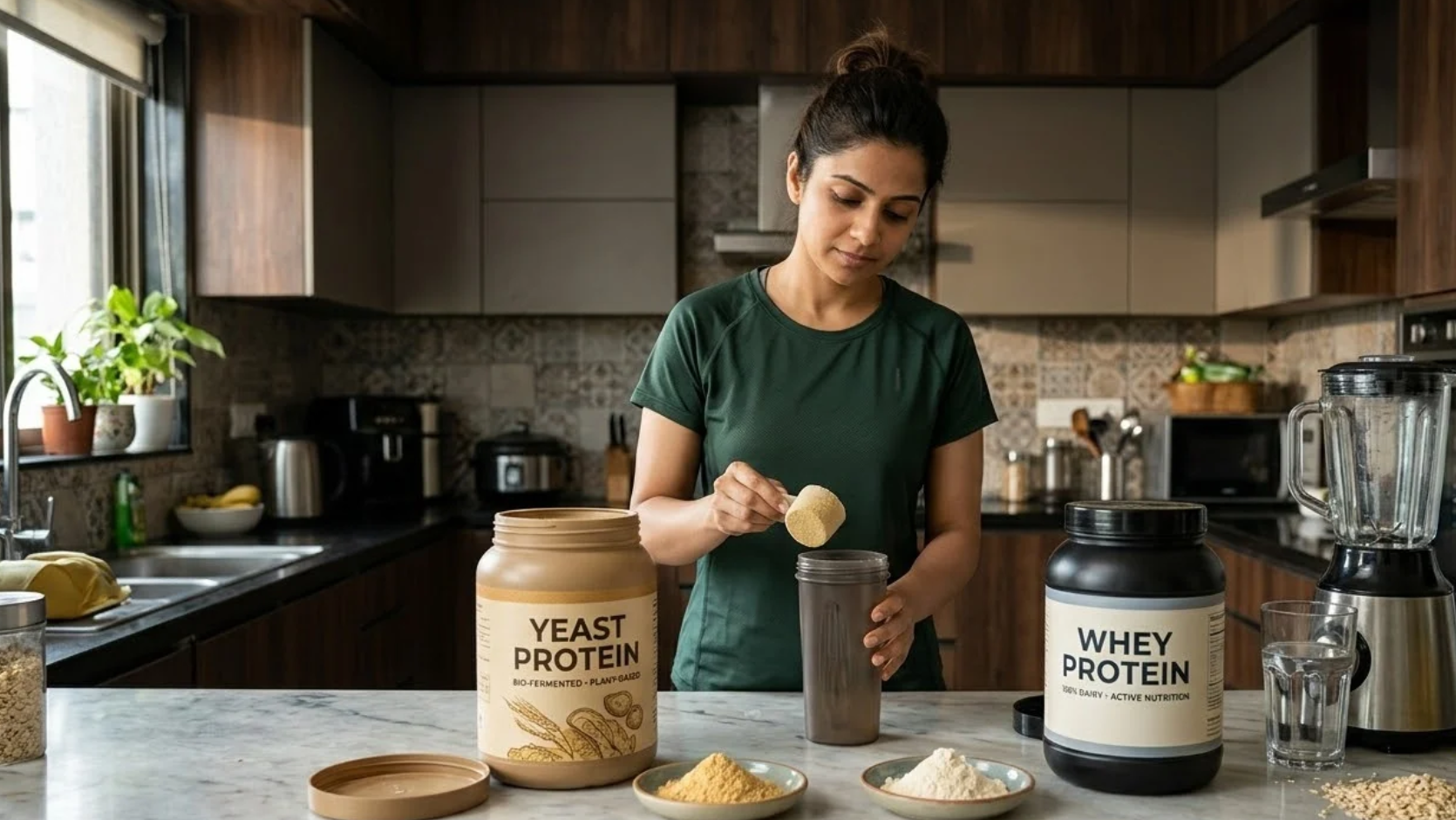
Whey remains an excellent protein for people who digest dairy well. Yeast protein matches it on completeness and PDCAAS while removing dairy and lactose from the equation. If whey leaves you bloated, or you follow a vegan or dairy-free diet, yeast protein is a strong alternative. Our guide to oats and whey protein covers the whey route if dairy suits you.
Benefits of Yeast Protein
- Complete protein: all nine essential amino acids in one source.
- Top quality score: PDCAAS 1.0 in Fittr’s yeast protein.
- Dairy-free and lactose-free: suits lactose-intolerant eaters.
- Vegan-friendly: no animal ingredients.
- Soy-free: helpful for people avoiding soy.
- Neutral taste: blends into savoury and sweet foods without a strong aftertaste.
- Consistent production: fermentation allows tight quality control.
Who Should Choose Yeast Protein?
Vegans and Vegetarians Who Avoid Dairy
Hitting daily protein targets on a plant-based Indian diet usually means a lot of dal, chana, soy and tofu. A complete, dairy-free protein in breakfast makes the rest of the day easier.
People With Lactose Intolerance
If milk or whey shakes leave you uncomfortable, yeast protein offers similar quality without lactose.
Busy Professionals and Students
When you do not have time to cook eggs or paneer, a ready food that already contains complete protein saves time. That is the idea behind vegan protein oats like No BS Protein Oats.
Gym-Goers Rotating Protein Sources
Even if whey suits you, rotating sources adds variety and can reduce reliance on shakes alone.
How Much Protein Do You Need?
Most active adults aim for roughly 1.2-2g of protein per kg of body weight per day, depending on goals and training. A practical way to reach that is to spread protein across meals – around 25-30g at breakfast, lunch and dinner. Use the Fittr macro calculator to work out your own number.
A Sample Dairy-Free High-Protein Day
| Meal | Example | Approx. protein |
| Breakfast | No BS Protein Oats (1 serving) | 26-32 g |
| Lunch | 2 rotis, 1 katori rajma, salad | ~15 g |
| Snack | Roasted chana, 40 g | ~8 g |
| Dinner | Tofu bhurji (150 g tofu), vegetables, rice | ~20 g |
| Total | ~70-75 g |
Yeast Protein in Everyday Foods Like Protein Oats
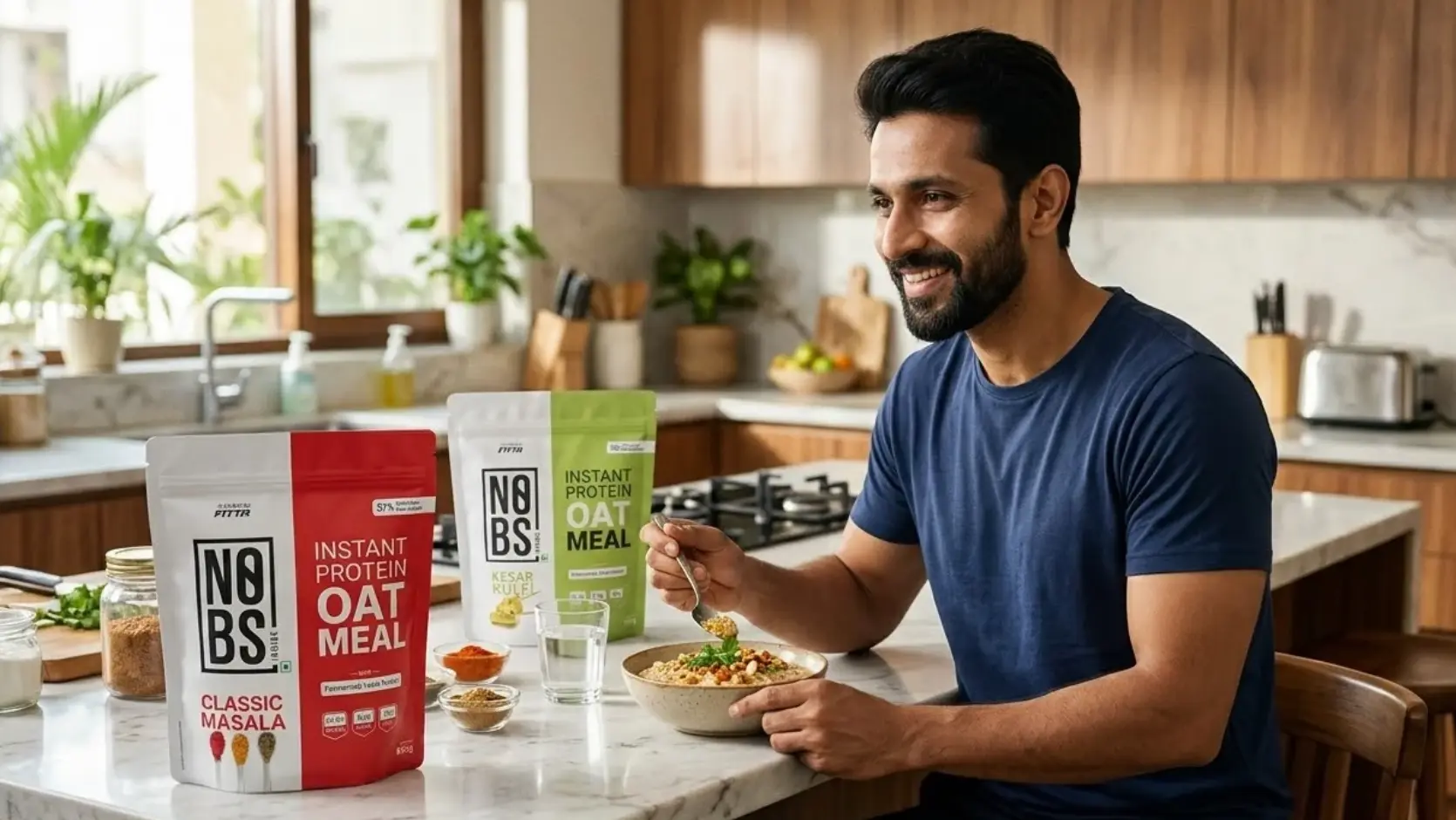
The easiest way to use yeast protein is not a scoop and a shaker – it is in foods you already eat. In No BS Protein Oats, complete yeast protein is built into an instant oatmeal, so one bowl delivers 26-32g of protein with no dairy, no preservatives and no artificial flavours. Nutrition claims are tested in NABL-accredited labs.
That means you get the fiber and slow carbs of oats with protein quality that matches whey. Choose Kesar Kulfi for a dessert-style bowl or Mango Coconut for a tropical one. Read protein oats vs regular oats to see how the numbers compare with plain oats.
How to Read a Yeast Protein Label
Not every product that mentions yeast protein uses it the same way. A quick label check tells you what you are really getting.
- Protein per serving: look for the grams of protein in one realistic serving, not per 100g of powder.
- Protein source order: if yeast protein is listed after several other ingredients, it may be a minor addition rather than the main protein.
- Quality claims: “complete protein” and a stated PDCAAS score show the brand has checked amino acid quality.
- Testing: independent lab testing, such as NABL-accredited labs in India, adds confidence that label numbers are accurate.
- Additives: check for preservatives, artificial flavours and fillers you would rather avoid.
- Allergen statement: confirm the product is free from dairy or soy if that is why you chose yeast protein.
Pairing Yeast Protein With Fiber
Protein works best as part of a balanced meal. Pairing it with a fiber-rich base like oats slows digestion and keeps you full for longer than protein alone. That is also why a protein oats breakfast tends to beat a quick shake for staying power through a busy morning. Our high protein oats guide explains how to build that bowl.
Common Myths About Yeast Protein
“Yeast protein will make bread rise in my stomach.”
No. The yeast in protein ingredients is processed and inactive. It does not ferment in your gut.
“Plant and fungal proteins are always incomplete.”
Some single plant proteins are short in an amino acid, but yeast protein is complete, and Fittr’s yeast protein scores PDCAAS 1.0.
“Only whey builds muscle.”
Muscle building depends on total protein, leucine-rich complete proteins and training. Complete non-dairy proteins can support muscle gain as part of a well-planned diet.
“Yeast protein tastes strange.”
Well-processed yeast protein is neutral, which is why it blends easily into flavoured foods.
If you have a known yeast sensitivity or a medical condition that limits certain foods, check with your doctor before adding any new protein source.
The Bottom Line
Yeast protein is a fermentation-based, complete protein that is dairy-free, lactose-free, soy-free and vegan. It contains all nine essential amino acids, and the yeast protein in No BS Protein Oats carries a PDCAAS of 1.0 – the same top score as whey.
For anyone who wants high-quality protein without dairy, yeast protein is one of the most practical options available, especially when it comes built into a food you already enjoy, like oats.
Frequently Asked Questions
What is yeast protein?
Yeast protein is protein concentrated from yeast grown by fermentation. It is a complete protein containing all nine essential amino acids and is naturally dairy-free.
Is yeast protein better than whey?
Both can be complete, high-quality proteins. Whey suits people who digest dairy well; yeast protein offers similar quality without dairy, lactose or soy.
Is yeast protein vegan?
Yes. Yeast is a fungus, not an animal, so yeast protein suits vegan and dairy-free diets.
What does PDCAAS 1.0 mean?
PDCAAS rates protein quality based on amino acid profile and digestibility. A score of 1.0 is the highest possible and means the protein fully meets human amino acid needs.
Is yeast protein the same as nutritional yeast?
No. Nutritional yeast is whole deactivated yeast used as a seasoning. Yeast protein is a concentrated protein ingredient designed to be a main protein source.
How can I add yeast protein to my diet?
The simplest way is through foods that already contain it, such as No BS Protein Oats, which gives 26-32g of complete yeast protein per serving.
Complete Protein, No Dairy Needed
Yeast protein, fermented yeast protein or dairy-free protein – whichever term you searched, the takeaway is the same: you can get complete, PDCAAS 1.0 protein without milk or soy.
Try it the easy way with No BS Protein Oats, or stock up with the combo pack and make a complete-protein breakfast your daily default.